Sunday, 19 June 2016

Innovative Ideas Institute

We were privileged to be invited to attend the annual conference of the South Carolina Association of School Administrators. The title of SCASA makes it clear who the intended audience is and the theme “Innovative Ideas Institute” makes the purpose clear. Innovative leadership was front of mind throughout the three days, and was unpacked through the keynotes, sessions, vendor exhibits and networking opportunities. And clearly anyone prepared to hold their conference practically on the sand of a stunning surf beach and rely on the delegates to show up to sessions has confidence in the coherence of the group around their vision.


We had no idea what to expect and discovered a group of warm and energetic educators at an event the size of ULearn in NZ - about 1500 attendees. The focus on innovative leadership was inspiring and I will post notes from some of the sessions I attended. We sat in on conversations at the state, district, and school levels and have lots to take home from their approach to teaching and learning as well as leadership.


We knew these people were onto something, which is why we reached out to them in the first place! Back when we were first considering moving from our Ubuntu based ASUS netbooks to Google’s Chromebooks, it was Donna Teuber, Director of Technology Integration and Innovation at Richland School District 2, who generously gave us her time and the District’s resources to share their journey with us.  They were one year into the move to Chromebooks and had documented the successes and pitfalls and we learnt so much from that.  Some of us still belong to their Chromebook Google Group where we get to see and learn from daily interactions from their extensive team about what is and isn’t working with their various tech solutions around GAFE and Chromebooks. These guys are dealing in numbers that sound more like our whole country than our cluster, so they really do have sample sizes to learn from.


It is resources like this 1:1 Implementation Site  and the vision outlined, that demonstrate the power of the robust technology solutions we have learnt so much from:


VISION
In Richland Two, students will work collaboratively in digital age learning environments on authentic problem and project-based activities which enhance creativity, critical thinking, communication, and problem solving. Through personalised, authentic and collaborative experiences, our students will develop the skills to prepare them for a future that we can only imagine.

Friday, 17 June 2016

Welcome to Portland

Our first impression of Portland, Maine as we flew in at 11pm was, “What a bunch of friendly and welcoming people live here”. Even on the (small) plane strangers were chatting across aisles and offering advice and help. When we landed and one bag didn’t arrive someone came up to us and asked if we had a luggage problem, showed us to the luggage counter and we were reunited with it immediately. Somehow travelled solo on an earlier flight and they had put it into storeage.  So we were feeling very buoyant when we were able to get a cab quickly with only a short drive into town ahead.

We were half a block away from our Air BnB apartment and checking addresses when “Whack”! A car appeared out of nowhere, did a U-Turn in the middle of the street and accelerated straight into the passenger side of our car. We were both sitting in the back and I was on the passenger side. My head ricocheted off the door and cracked into RGB’s head. Our driver was pretty shaken but unharmed.

We pulled over and very quickly (under 10 minutes) had police, fire engines and ambulance on the spot. Most impressive and never experienced in NZ! Everyone was very kind and helpful to us, but other than feeling a bit sore we really couldn’t identify any injury to justify the ambulance. Those involved were dead keen to get us off to hospital for CAT scans etc but at 12.30 am we just wanted to go home and sleep it off! Fortunately one of the service men had spent time in Christchurch helping out during the earthquake, and recognised our stoic state as reflecting a national characteristic rather than a deep concussion and let us go home armed with directions on how to access the trauma unit at the hospital nearby if needed. He was also undoubtedly aware of our non-litigious society!

The car was pretty munted along the side, but in hind sight we are impressed by how well the Honda we were in stood up to the impact of a large Volvo ramming it. No glass broken to cause human damage and internally the car kept its shape.

This morning we have woken feeling very grateful to answered prayers for protection while we travel. We thought we had got through the worst of it when we returned the hire car in Sicily, but clearly we need to keep praying! We have a few aches and bruises and I've discovered that the side of my head that collided with RGB is more tender than the side that whacked the door. All our gear was undamaged and my MacBook Air which was against the car door on the floor in my backpack fired up fine this morning.

Keep praying for us people. And buy cars with those side door safety impact features if you can.

Photo is from our walk along the Portland waterfront this morning before heading out to work. Glorious sunshine to clear our heads and walk off the aches.

Monday, 13 June 2016

Full Day Kindergarten

In Toronto, Ontario it was a pleasure to make daily visits to Post's Corners Public School in the Oakville neighbourhood. This is a learning environment with beautiful facilities, a calm atmosphere, clean and tidy property, and a place where mothers and fathers walk their children to school and linger for chats at the gate with the teachers and each other.

We took particular note of the Junior school programme. The Full Day Kindergarten for 4 and 5 year olds would be the envy of New Entrant teachers in NZ. The class size is 15 -25 learners and has TWO trained teachers; one a fully qualified ECE teacher and the other a fully qualified primary school teacher. (NB: less than 15 learners and the teacher ratio reduces to one teacher).


Read what they have to say about it on the class site or a snippet below….


Here’s what you can expect:

Enhanced learning during the school day  
  • Teachers and early childhood educators will work together in the classroom to help young children learn and grow. This team approach will bring out the best in your child through activities and play, guided by a new full-day kindergarten curriculum.
A stronger foundation for learning
  • Research shows that early learning has long-term benefits for a child’s academic and social skills. A full day of learning early in life can help improve your child’s reading, writing and math skills later on. It also makes the transition to Grade 1 easier – for you and your child. Good for kids, good for parents, good for Ontario
  • Full-day kindergarten is an investment in our future. It’s part of the government’s plan to better prepare our kids by giving them the tools they need to succeed and build a stronger Ontario.


Read the government research published about Full Day Kindergartens.

My instinctive response was, “Imagine the progress we could make in our Manaiakalani schools if we were resourced like this!” And then remembered, well actually our MDTA classes do have two teachers and evidence to date has proven significant acceleration is possible.
See Michelle and Karen’s posts from 2014 and Steph from 2016 - all New Entrant teachers demonstrating the benefit of a powerful pedagogy and two teachers.

Thursday, 9 June 2016

Local Produce

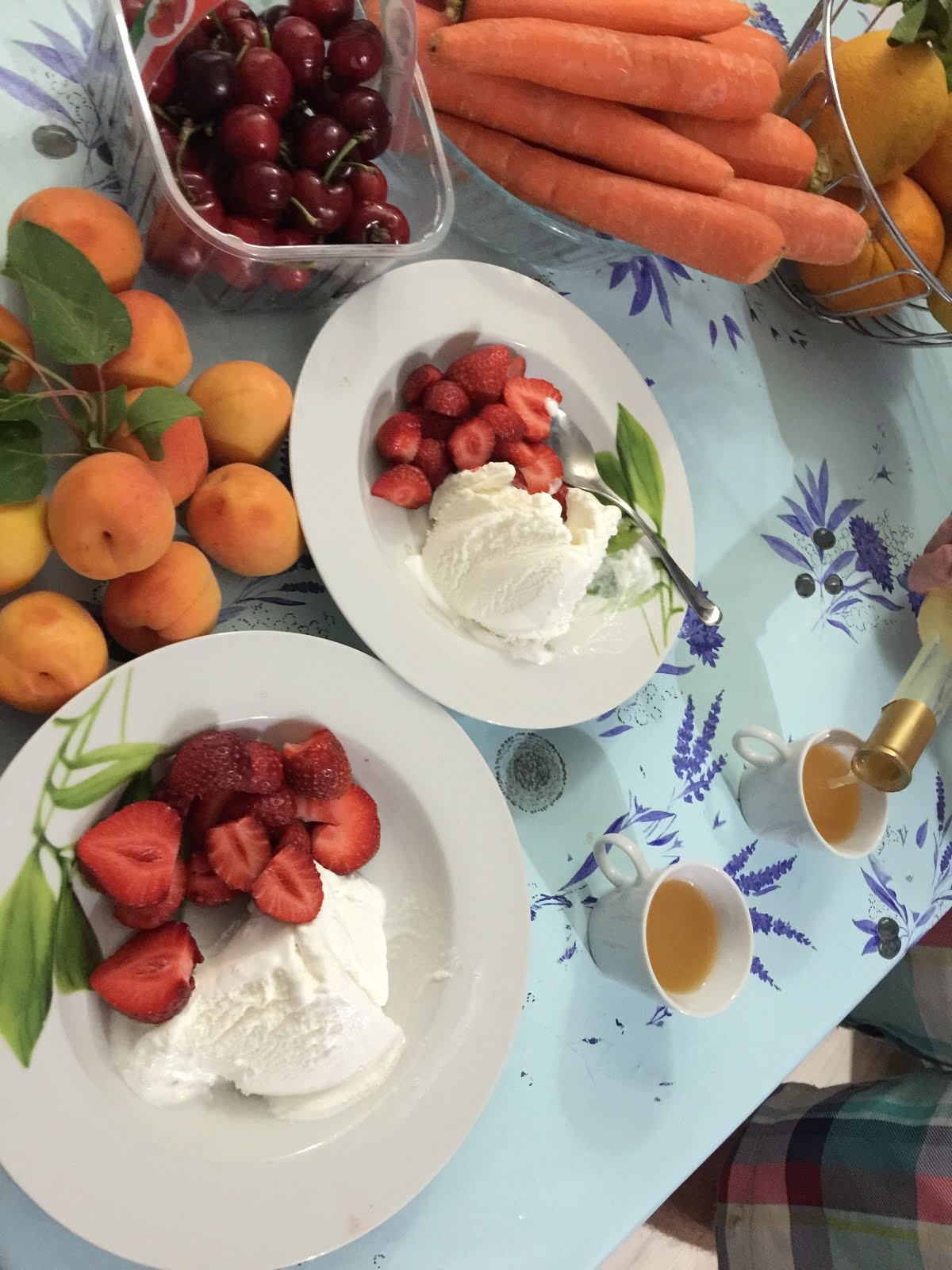
We had been looking forward to the food Sicily is renowned for and it did not disappoint. We shopped at the local markets, supermarkets, gelato shops and bars (which are a very different place from a bar in NZ) and on the side of the road.


The tomatoes are always amazing in Italy and the fruit was fabulous too.

We provided amusement for the people at the supermarket with our shopping conversations involving a great deal of mime and some Google Translate. Twice I brought home meat to cook that we never did find out what it actually was - but it tasted great.

It was a bit tricky only having a frying pan and a gas ring, but we managed to create a camp oven out of it when needed.

I do like the way meat, salami and cheese is presented when you buy it from the butcher or supermarket. It comes sliced to your requirements and neatly laid out in layers between sheets of grease proof paper then rolled and wrapped - see the photos on the right.  

It sure beats polystyrene.

Wednesday, 8 June 2016

Sheep

I have been intrigued by observing the sheep farming practices on the land by the sea surrounding our cottage. Whenever we went out walking we would hear the sheep before we saw them, as a couple were wearing large bells around their necks. 


There were no fences that we could see so they were always accompanied by their shepherd. He could take a while to locate if he was on his back under a bush.

Two things stood out from a kiwi perspective; they were foraging for food in sparsely vegetated  dry and dusty land, and they were carrying very heavy wool in a climate where we were glad to be wearing jandals and singlets.
Today they were moved up the hill near us and I was relieved to see that they were freshly shorn. Just in time for the heat of Summer.


Tuesday, 7 June 2016

Coastal Paradises

The stunning coastal beauty of this part of Sicily drew us here from when we first saw it on the internet. The sea has lived up to the images we had seen and we have spent happy hours swimming, walking and chilling out at the beach. It is one of the earth’s  very special places.


After marvelling at the scenery, pivot 180 degrees and this beauty is marred by a very thoughtless approach to rubbish disposal. We have met people who are very carefully recycling all their rubbish, but the extent of the problem here indicates that there are a significant number of people using the beach and the sea as a dump. And not just for household rubbish - building debris, tyres and engines all seem to end their life here.


Sadly they are not alone in experiencing this problem. We have seen it in Papua New Guinea in idyllic Milne Bay, we have seen it Vietnam on Phú Quốc, an island paradise in the Gulf of Thailand. And our own Pt England coastline tempts thoughtless people to take the easy option with their household rubbish.

In all of the places I have mentioned we notice that at beaches where local livelihood depends on visitors there is often a team who are up early in the morning ensuring the beaches present a pristine appearance when the visitors arrive. But it needs to be done daily because clearly there are more people messing up than cleaning up.

We need to do much better right across the planet.

Sunday, 5 June 2016

Letter to the Churches

We are currently near one of the many places Paul stopped on his missionary journeys and see a lot of references to him around us. It has got us thinking about how churches communicate.


This Sunday we decided not to attend a church and instead had our own reflection, in English, at home. During our travels we have had some wonderful experiences which I have documented here and been very blessed by the services we have attended. But as we have travelled deeper into Europe and have become increasingly challenged by the languages the services we attended have been held in, the more we have understood the barriers churches unwittingly erect for people who do not speak the language.


In all churches the bonus we have is knowing the back story in our own language, so hopefully can provide a little bit of context from prior knowledge. In Catholic churches where Mass follows a similar format there is a sense of familiarity which in some ways is a blessing, but can also increase the frustration by not being able to fill in the gaps in between - achingly close to understanding, but not!


It has made us think about what we should be providing in our own multi cultural church, where one thing we have in common - other than our faith - is that we all have different languages as our mother tongue.


The first and most important gift to us in our travels has been someone welcoming us with a smile. That has not always been our experience, particularly in a couple of cases where we were a few minutes late due to the time our boat docked. What a difference it makes to be made welcome and shown a vacant seat.


Every cathedral or church we attended had super modern sound systems so that the pastor or priest was wearing a microphone and discreet speaker systems meant they could be clearly heard. Well and good, but no good if you can’t connect in anyway with the language spoken.


We have come to appreciate print material. Even in languages using a different alphabet, if we were given some kind of programme of print material we could either look it up on our phone or decode where in the Bible we should be looking and work it out. We were grateful that some ancient cathedrals (ie more than a thousand years old) had electronic signage on the walls with the Hymn number and Bible reading displayed.


However, as I have commented before - a cathedral comes alive when it is being used for the intended purpose and attending a service is the ONLY way to fully experience a visit to a cathedral or church. On every occasion we have been uplifted and blessed by the powerful music led by organs and choirs. And it is still amazing that no matter how wide the language differences, if you know the story being told the cadence and passion of the speaker has the power to bring the message to life.


We have some takeaways for our return home - to a place where we have wifi, data projectors, screens, sound systems and multimedia:


A warm welcome from fellow human beings on arrival is super important.
The spoken word is usually too rapid to translate on the fly and make sense of, unless you could afford United Nations style translation kits for everyone!
Written text is essential. Having the important points in text makes a world of difference. In most cases in NZ this would at the least mean ensuring important text is displayed on screens. This gives people time to try to decode and even to look up in their first language.
It would be nice to be able to provide the most important points in multiple languages, but this is not always possible.
Visual images are very important. They (should) make the message accessible.
We could be using QR codes, apps and all kinds of digital tools to make the services more accessible.
Having ‘No Phones’ signs up around the church is a barrier. We presume they probably mean, ‘silence your phone’ or ‘don’t talk on the phone’. But our phones with translation apps and tools became our communication line and enabled us to participate in the service, not check our FaceBook!

We look forward next Sunday in Toronto to translating a Canadian-Kiwi accent and hopefully a much fuller participation in the service.